
Birds fill the air with unique songs and calls that have fascinated humans for centuries. Today, artificial intelligence (AI) transforms this natural symphony into actionable insights. Advanced bird voice recognition technology can identify bird species simply by listening to their vocalizations, making birdwatching, research, and conservation more accessible and precise than ever before.
This 2025–26 guide explores the rise of AI-powered bird sound identification, the technology behind it, popular apps, real-world benefits, and answers to common questions.
What Is Bird Voice Recognition Technology?
Bird voice technology combines artificial intelligence, machine learning, and advanced audio analysis to recognize and classify bird species from their sounds. These systems analyze recordings of songs, calls, and other vocalizations, then match them against extensive databases of known bird sounds.
Also read this :Beat the Heat Without Breaking the Bank: Hidden Tricks to Cut Your Electricity Bill in Half!
Core components include:
- Sound pattern recognition: Detecting unique rhythms, pitches, and sequences in bird calls.
- Audio frequency analysis: Breaking down spectrograms (visual representations of sound) to identify subtle differences.
- Deep learning models: Neural networks trained on thousands of hours of labeled audio data from global bird species.
The technology has evolved rapidly. Apps now offer near real-time identification, often working offline after initial downloads. Accuracy improves with clear recordings, though background noise or overlapping calls can still pose challenges. Recent advancements, such as domain-specific fine-tuning, have boosted performance in specific environments like forests or wetlands.
Beyond simple species ID, emerging AI models explore deeper meanings in birdsong—distinguishing alarm calls from mating songs or territorial signals—opening doors to better understanding avian communication.
How AI-Powered Bird Sound Identification Works
Modern systems use bioacoustics—the study of animal sounds—powered by AI. Here’s a simplified process:
- Recording: Users capture audio via smartphone microphones or dedicated field recorders.
- Preprocessing: The app filters noise and converts sound into spectrograms.
- Analysis: Deep learning models (often convolutional neural networks) compare features against trained datasets covering hundreds to thousands of species.
- Output: The app displays likely species matches with confidence scores, sometimes including photos or additional info for confirmation.
Tools like Google’s Perch 2.0, primarily trained on bird data, even transfer learning to other domains, such as underwater whale calls, showing the versatility of these bioacoustics models.
In 2025–26, models handle complex real-world scenarios better, including multi-label recognition where multiple birds sing simultaneously.
Top Bird Voice Identification Apps in 2025–26
Several user-friendly apps bring this technology to everyone’s pocket:
1. Merlin Bird ID (Cornell Lab of Ornithology)
- Key features: Real-time sound identification, photo recognition, offline support after downloading regional packs, free core features.
- Strengths: Highly accurate for North America and expanding globally; user-friendly for beginners and experts.
- Best for: Casual birdwatchers and life-list building. The app has helped millions add sightings during hikes or backyard observation.
- Application Link : Download
2. BirdNET
- Key features: Advanced deep learning for global species (over 3,000 in some versions), scientific-grade accuracy, support for research and community data collection.
- Strengths: Excellent for biodiversity monitoring; works in many countries and languages.
- Best for: Researchers, conservationists, and serious birders needing detailed analysis.
- Application link : Download
3. ChirpOMatic and Others
- Popular in Europe and North America with simple interfaces and instant results.
- Many apps now integrate community science, where user recordings contribute to global datasets that improve the AI over time.
- Application link : Download
Additional tools and analyzers continue to emerge, with open-source options and mobile-optimized deep learning models making real-time on-device recognition possible even without constant internet.
Benefits for Birdwatching, Research, and Conservation
AI bird voice technology democratizes ornithology:

- For birdwatchers: Beginners identify unfamiliar songs without years of training. Apps provide instant feedback, turning casual walks into engaging learning experiences.
- For scientists: Passive acoustic monitoring records soundscapes 24/7, detecting rare or nocturnal species that visual surveys might miss. This helps track population changes, migration patterns, and habitat health.
- For conservation: Early detection of threats, such as habitat loss or poaching (via changes in soundscapes). In places like Hawaii or rainforests, AI monitors endangered birds and supports protection efforts.
- Citizen science: Millions of user submissions refine models and create vast open datasets.
Nature sound recordings also serve therapeutic purposes—relaxation, stress relief, sleep aids, and even support for conditions like insomnia or high blood pressure—through apps featuring bird songs alongside ocean waves or rain.
Challenges and Future Outlook
While impressive, limitations remain:
- Accuracy drops in noisy environments or with rare species having limited training data.
- Ethical considerations around data privacy and potential disturbance to wildlife from excessive recording.
Looking ahead to 2026 and beyond, expect:
- More multilingual and region-specific models.
- Integration with augmented reality for combined audio-visual identification.
- Advanced “translation” efforts that map calls to behavioral contexts.
- Wider use in automated biodiversity monitoring devices.
Research continues to refine accuracy through techniques like multi-scale texture modeling and transfer learning.
Important Links
| Home page | Click here |
| Join WhatsApp group | Click here |
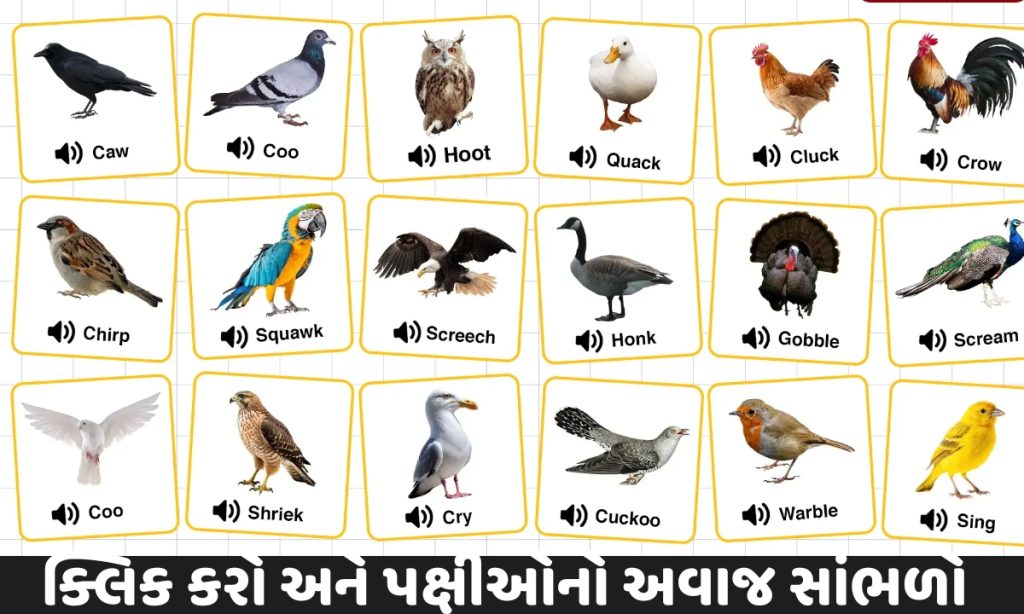
| Bird’s voice | Click here |
Frequently Asked Questions (FAQ)
Top apps like Merlin Bird ID achieve high accuracy with good recording quality, often 90%+ for common species in well-covered regions. Performance improves with clear audio and regional model downloads. Overlapping sounds or uncommon species may lower confidence scores.
Many core features, including sound identification in Merlin Bird ID, are free. Some advanced analytics or ad-free experiences may require purchases or subscriptions.

Yes. Apps are designed with intuitive interfaces for all skill levels. They often include tutorials, visual guides, and confidence indicators to help users learn and verify identifications.
Yes, most allow downloading species packs for specific regions, enabling identification without internet after setup.
It enables large-scale, non-invasive monitoring of bird populations and ecosystems, supporting early intervention for threatened species and habitats.
Therapeutic relaxation (e.g., for stress, sleep, or focus), bioacoustics research, and even cross-domain AI applications like marine mammal monitoring.
Conclusion: Listening to Nature with AI
Amazing bird voice technology in 2025–26 bridges humans and the avian world like never before. Whether you’re a backyard enthusiast, dedicated birder, researcher, or conservationist, these AI tools make nature more accessible and understandable.
Download an app, step outside, and listen. The birds have been singing their stories for millennia—now technology helps us finally hear them clearly.

