Monsoon Laundry Guide: The arrival of the monsoon brings joy with its refreshing rains, lush greenery, and relief from scorching summer temperatures. However, for homemakers and busy families, it also introduces a persistent household headache: drying clothes efficiently. With frequent downpours, overcast skies, and elevated humidity levels often crossing 80-90%, washed garments can remain damp for days rather than hours. This prolonged moisture retention leads to musty odors, fabric deterioration, mildew growth, and potential health risks including skin allergies, fungal infections, and respiratory discomfort.
Also read this: Google Find Hub App 2026: The Ultimate Tool to Locate and Secure Lost Android Devices
In this detailed, expanded guide, we delve deep into the science behind slow drying during monsoons and provide comprehensive, actionable strategies to overcome these challenges. Whether you live in a compact urban apartment with limited space or a larger home, these tips blend traditional Indian household wisdom with practical modern hacks. No expensive equipment is required for most methods, making them accessible to everyone. By the end of this article, you’ll have a complete toolkit to keep your laundry fresh, hygienic, and dry even during the heaviest rains.
Understanding Why Clothes Struggle to Dry in Monsoon Season
Monsoon weather fundamentally alters the drying process. In normal sunny conditions, evaporation occurs rapidly as sunlight provides heat energy and low humidity allows water vapor to escape into the air. During rains, however, high atmospheric moisture saturation slows this evaporation dramatically. Wet fabrics hold onto water molecules longer, creating an ideal environment for bacteria and fungi to thrive.
Common consequences include:
- Musty smells: Caused by bacterial breakdown of organic residues in damp conditions.
- Fabric damage: Weakened fibers, color fading, and shrinkage in some materials.
- Health concerns: Increased risk of athlete’s foot, ringworm, or allergic reactions from wearing incompletely dried clothes.
- Time inefficiency: Repeated re-washing wastes water, detergent, and energy.
Recognizing these issues is the first step toward effective solutions. The core principle across all tips is to minimize initial water content and maximize airflow while reducing ambient humidity around the clothes.
Monsoon Laundry Guide
Tip 1: Thoroughly Remove Excess Water Immediately After Washing
The foundation of fast drying begins right at the washing stage. Excess water trapped in fibers is the biggest culprit for delayed drying.
Step-by-Step Process:
- Always run an extra spin cycle in your washing machine. Most machines have a dedicated “spin only” mode—use it for 5-10 additional minutes.
- For hand-washed clothes, wring them out firmly but carefully. Twist from the ends toward the center, applying even pressure without stretching delicate fabrics like silk or wool.
- For heavier items such as jeans, towels, or bedsheets, consider investing in a manual wringer if you don’t have a machine.
Why This Works Scientifically: Removing 70-80% of water mechanically reduces the load on natural evaporation. In humid air, every drop counts. This step alone can cut drying time by half.
Pro Tips for Different Fabrics:
- Cotton: Spin vigorously as it absorbs a lot of water.
- Synthetics (polyester, nylon): They release water more easily but benefit from extra spinning to prevent odor trapping.
- Delicates: Use gentle spin and avoid aggressive wringing to prevent damage.
Many households overlook this, leading to frustration. Make it a non-negotiable habit for monsoon months.

Tip 2: Absorb Remaining Moisture Using Dry Towels
Even after spinning, some garments retain significant dampness. This is where the towel trick proves invaluable.
Detailed Method:
- Select a large, clean, absorbent cotton towel that is completely dry.
- Lay the wet garment flat on the towel, roll it up tightly like a sushi roll, and press gently with your hands or body weight for 2-5 minutes.
- Unroll and repeat with a fresh dry towel if the garment is still very wet (e.g., thick blankets or multiple layers).
- For smaller items like socks or undergarments, use smaller towels or even paper towels in a pinch.
Benefits and Variations:
- This method extracts residual moisture without electricity or heat, making it eco-friendly and cost-free.
- Ideal for emergencies when rain starts unexpectedly and you need quick results.
- Combine with shaking out clothes vigorously before rolling to loosen fibers and release trapped water.
Users report that this technique is particularly effective for thick fabrics that normally take 48+ hours to dry. Over time, you’ll notice fewer instances of mildew.
Tip 3: Leverage Fans and Proper Ventilation for Artificial Airflow
Sunlight may be scarce, but air movement is always controllable.
Implementation Guide:
- Choose a well-ventilated room with windows that can be opened for cross-breezes (even if slightly).
- Position a ceiling fan or standing fan on medium to high speed, directing airflow across the drying area.
- Hang clothes near (but not directly in front of) the fan to create continuous circulation without concentrating moisture in one spot.
- Rotate clothes periodically (every 2-3 hours) so all sides receive equal exposure.
Advanced Ventilation Strategies:
- Use exhaust fans in kitchens or bathrooms if drying indoors.
- Create a makeshift drying zone by placing racks near open balconies (protected from direct rain).
- In extremely humid conditions, pair the fan with a dehumidifier or air conditioner if available—these reduce room humidity significantly.
Airflow replaces saturated air around wet fabrics with drier air, accelerating evaporation. This mimics the natural wind effect of sunny days. Many families keep fans running during daytime hours with minimal electricity impact.
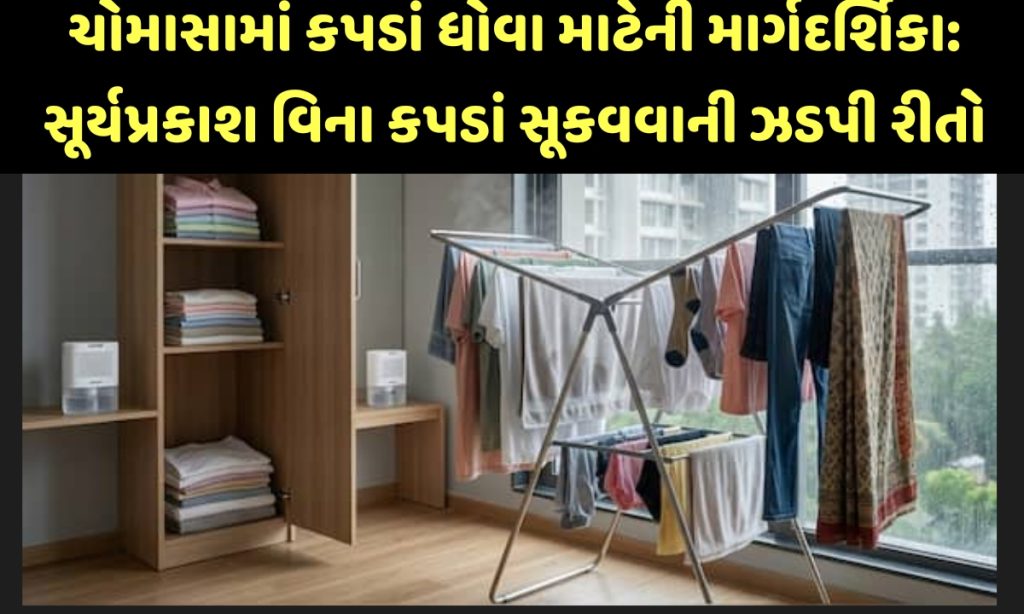
Tip 4: Ensure Adequate Spacing Between Clothes on the Drying Rack
Crowding is a common but easily fixable mistake.
Best Practices:

- Use a sturdy drying rack or clothesline with enough capacity.
- Leave at least 4-6 inches of gap between individual garments.
- Hang lighter items on top racks and heavier ones lower for better vertical airflow.
- Avoid bunching socks, towels, or multiple shirts together.
The Science of Spacing: Proper gaps allow air to circulate 360 degrees around each piece, preventing “shadow” zones where moisture lingers. This leads to more uniform and faster drying across all items.
For large families, consider multiple racks or outdoor lines during rain breaks. This small adjustment yields noticeable improvements in drying speed and reduces overall mustiness.
Tip 5: Use Hangers Strategically for Better Exposure
Draping clothes over lines can limit surface area exposure.
How to Apply:
- Invest in a set of plastic or wooden hangers suitable for different garments.
- Hang shirts, kurtas, dresses, blouses, and trousers on hangers to keep them open and unfolded.
- For pants, hang by the waistband or use clips for even drying.
- T-shirts and light tops benefit greatly from this method as both front and back are exposed.
Additional Advantages:
- Maintains garment shape and minimizes wrinkles, saving ironing time.
- Increases effective drying surface area by 30-50% compared to folded draping.
- Easy to move around for optimal fan placement.
This technique is especially useful for office wear and ethnic clothing common in Indian households.
Additional Monsoon Laundry Hacks and Preventive Measures
Beyond the core five tips, incorporate these supplementary strategies for even better results:
- Timing Your Washes: Wash and dry during relatively drier windows, such as mornings or when rainfall pauses.
- Natural Odor Fighters: Add 1/2 to 1 cup of white vinegar to the rinse cycle. It neutralizes odors, softens fabrics, and has mild antifungal properties.
- Indoor Drying Setups: Foldable racks placed near windows or in sunny spots (when available) are game-changers. Portable ones can be moved room-to-room.
- Dehumidifying Aids: Use silica gel packets, rock salt bowls, or charcoal near drying areas to absorb ambient moisture.
- Fabric-Specific Care: Dry woolens flat on towels; synthetics dry faster but need vinegar; cottons benefit most from spacing and fans.
- Post-Drying Checks: Feel seams and thicker areas—they dry last. Only store when bone-dry.
- Machine Maintenance: Clean your washing machine regularly to prevent mold transfer to clothes.
Long-Term Prevention: Keeping Mold and Odors at Bay
Mildew thrives in damp environments. Develop habits like:
- Regular deep cleaning of closets with vinegar solutions.
- Using mothballs or neem leaves in storage.
- Occasional sunlight exposure when possible, as UV rays naturally disinfect.
- Rotating laundry loads to avoid accumulation of damp items.
These practices ensure not just faster drying but healthier clothing overall.
Fabric and Weather Considerations Across Regions
India’s diverse climate means monsoon intensity varies. Coastal areas face higher humidity than inland regions. Adjust tips accordingly—more fan use in humid zones, spacing emphasis everywhere. Delicate silks and woolens require extra care to avoid stretching or felting.

Important Links
| Home page | Click here |
| Join WhatsApp group | Click here |
FAQ: Answering Common Questions About Monsoon Clothes Drying
Q1: How long do clothes typically take to dry in monsoon without these tips?
Without intervention, light clothes may take 24-48 hours, while thicker items can remain damp for 2-3 days or more, leading to bad odors.
Q2: Is running a fan all day expensive?
A ceiling fan on medium uses very little power (around 50-75 watts). It’s far cheaper than re-washing mildew-affected clothes.
Q3: Can I use a tumble dryer during monsoon?
Yes! Dryers excel in humid weather. Combine with pre-spin and towel methods for best energy efficiency.
Q4: What if my clothes still smell musty after drying?
They likely aren’t fully dry. Re-wash with hot water (if fabric-safe) and vinegar. Ensure complete dryness before storage.
Q5: Are there any natural alternatives to fans or machines?
Yes—maximize natural cross-ventilation, use charcoal absorbers, and dry during less humid hours. Traditional rope lines in breezy corridors work well.
Q6: How do I dry baby clothes or delicates safely?
Use extra towel absorption, gentle fans, and hangers. Avoid direct heat and ensure thorough drying to prevent skin irritation.
Q7: Does vinegar damage clothes over time?
In moderation (diluted rinse), it is safe for most fabrics and actually helps preserve colors and remove residues.
Q8: What about drying in small apartments with no balcony?
Focus on indoor racks near windows/fans, spacing, and dehumidifying tricks. Multiple smaller loads are better than one big crowded one.
By implementing these detailed strategies, you can transform monsoon laundry from a frustrating chore into a manageable routine. Stay consistent, adapt to your home setup, and enjoy fresh clothes throughout the season. These methods not only save time and effort but also promote better hygiene and longevity of your wardrobe.